

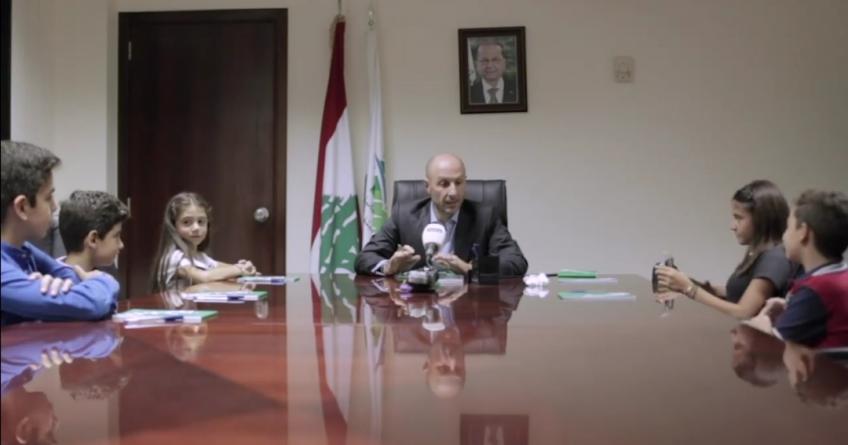
“Fish has a lot of benefits for kids, but we children are eating fish full of microplastics. What are you doing to us? Why aren’t you protecting us,” said Belicia, a seven-year-old Lebanese girl to the Minister of Environment in Lebanon.
Belicia is one of 5 children who are members of an Eco-Children Committee that is established by Lebanese NGO Public Matters Lebanon for children to develop initiatives and provide constructive solutions to social issues in their communities.
To ensure long-term solutions to “plastic pollution” -the greatest threat to health in Lebanon- Public Matters Lebanon NGO, in partnership with the UN Information Centre in Beirut, launched in December 2019 a local environmental campaign entitled “#Reduce” to highlight the importance of developing eco-friendly habits, reduce waste and avoid single-use plastics.
#Reduce campaign is the result of combined efforts by Public Matters Lebanon and UNIC Beirut team to promote SDG 14 and incite the youth to contribute to the achievement of all 17 Global Goals. It included an action plan that entailed the establishment of an atelier dedicated to the manufacturing of eco-friendly shopping bags to reduce the use of plastic bags in supermarkets and help create job opportunities for women who will work in this atelier.
The action plan also included a visit by the Eco-Children Committee to the Minister of Environment to propose a list of solutions to plastic waste in Lebanon.
Carl, a 5-year-old member of the committee told the minister, “Do you know that 80 percent of our litter are made up of plastic?”
“It’s very dangerous that Lebanese people consume on average one bag per day, and this counts to around 4 million plastic bags per day,” said Roy, a 10-year-old boy, member of the committee as well.
“We wish you could put your hand in ours in order to find a solution. Our society is made up of children and adults and this is why we will not accept to remain on the margins,” said Maria an 11-year-old member of the committee.
Those children, who are being trained on fostering their sense of belonging and strengthening their capacities to participate in social, environmental, cultural and educational decision-making issues, proposed four solutions to the minister who willfully endorsed and signed them. They include, the issuance of two decrees prohibiting the use of plastics in all ministries in Lebanon and stopping schools from selling students food in plastic containers. Reducing plastics by installing refill stations for laundry detergents in supermarkets is another solution, in addition to initiating a children’s eco-committee based in Lebanon and which consists of all Middle Eastern countries.
“It’s very nice for the officials to lead as an example, especially for children,” the children told the minister. “Are you ready to work with us?”
Environment Minister Fady Jreissati was very impressed by the children and their enthusiasm at such an early age. “I am so happy to be with you. Meeting with you is one of the best things I’ve done in my life. All those older than you should be ashamed of themselves because they failed to do what you’ve done,” he said.
Aiming to reach the largest possible number of Lebanese people, the campaign kicked off in a short video that was screened for a month in cinemas and on TV stations, electronic advertising screens and social media platforms.
The video shows Lebanon’s marine biosphere polluted as a result of the excessive use of plastic in the absence of needed policies to address the growing waste crisis in the country.
