

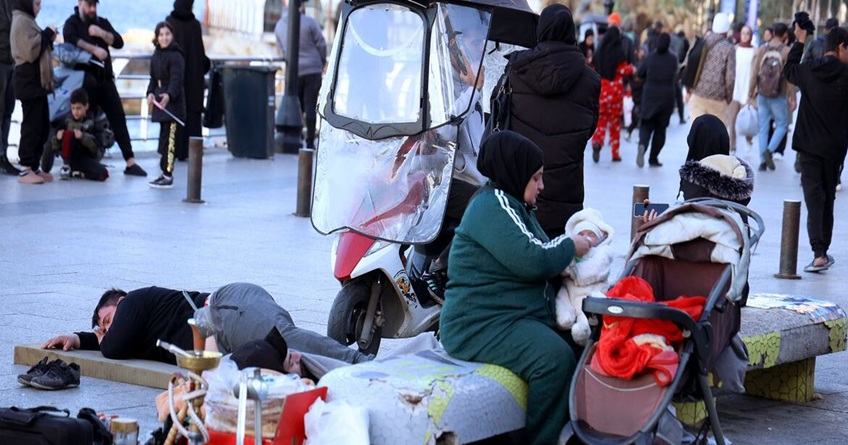
As the conflict in the Middle East continues to ripple across the region, the UN Security Council is meeting today to discuss the escalating situation, with a morning briefing focused on Lebanon and a second session later on the wider crisis. Across the UN system, agencies are warning of mounting humanitarian needs as displacement rises, services come under strain and regional instability disrupts mobility, trade and aid operations. Stay with us as we bring you the latest developments, reactions and updates from UN Headquarters and across the region. UN News app users can follow the coverage here
HIGHLIGHTS
- Security Council meets on Middle East: Ambassadors are meeting in New York to discuss the escalating situation in Lebanon, with senior UN officials briefing on political, humanitarian and security developments.
- Humanitarian response scales up: The UN migration agency, IOM, has activated emergency scale-up protocols as displacement and humanitarian needs rise across several countries in the region.
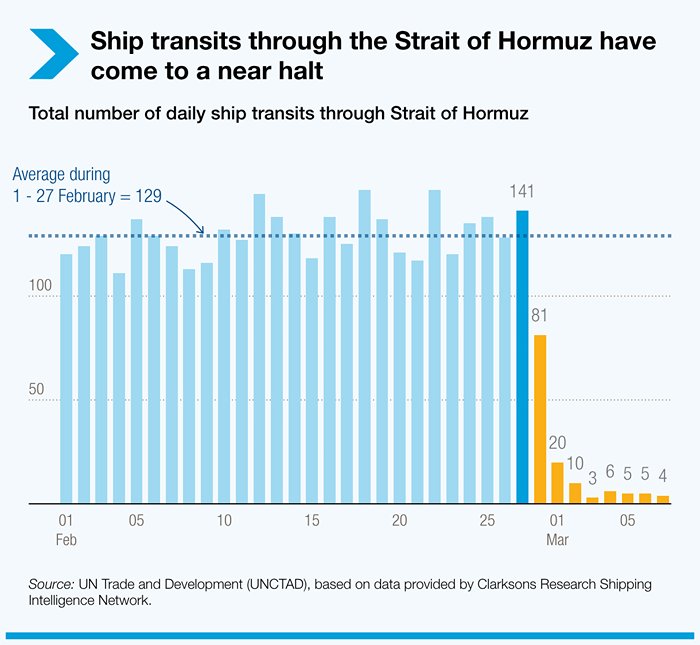
- Shipping through Hormuz collapses: Ship traffic through the strategic Strait of Hormuz has dropped from more than 140 daily transits before the conflict to just a handful, raising concerns for global energy and supply chains.
- Airspace restrictions disrupt travel: Flight suspensions and security measures across several Middle Eastern countries are affecting civilian travel, commercial routes and the movement of humanitarian personnel and supplies.
: sole crossing into enclave only ‘partially’ open
While war roils the Middle East, it’s easy to forget that there’s still widespread hunger and suffering in Gaza, despite a ceasefire between Hamas fighters and Israel.
In an alert on Wednesday, head of the UN agency for Palestinian refugees (UNRWA) Philippe Lazzarini, noted that the sole crossing into the devastated enclave is now only “partially reopened”. Israeli authorities closed Kerem Shalom in southern Gaza on the first day of Israeli-U.S. bombing of Iran and reopened it on Tuesday 3 March.
On Sunday, the UN delivered more than 427,000 litres of fuel into Gaza to power critical humanitarian services, including health care, and water, sanitation and hygiene facilities. This brings the total amount of fuel entering the Gaza Strip since Kerem Shalom reopened to 1.4 million litres.
“Just as a reminder, we need more than two million litres of fuel every week to avoid interruption or reduction in our services,” the UN Secretary-General’s spokesperson told journalists on Tuesday.
Airspace restrictions disrupt travel and aid operations
Airspace restrictions across several Middle Eastern countries are continuing to disrupt civilian travel, commercial flights and humanitarian operations.
Flight suspensions have been reported in Syria, Iraq, Iran, Kuwait, Bahrain, Qatar and the United Arab Emirates, affecting mobility across the region.
The impact is also cascading beyond the region, including in South and East Asia, where many travellers rely on Gulf transit hubs for onward international travel.
Displacement and cross-border movements increase across region
Population movements linked to the escalating crisis continue to shift across several countries, reports the UN migration agency, IOM.
In Iran, small-scale internal displacement has been reported in Tehran following impacts on residential areas, while border movements remain limited but closely monitored.
Nearly 3,500 people crossed the Iran-Pakistan border in early March, most of them Pakistani nationals returning home. Meanwhile, almost 19,000 undocumented Afghan migrants arrived in western Afghanistan in recent days.
In Lebanon, large-scale displacement continues following intensified strikes, with hundreds of thousands of people forced from their homes. Cross-border arrivals into Syria are also increasing as people seek safety.
IOM emergency scale-up for Iran regional crisis
Having activated its scale-up protocols for major crises on 6 March, the UN migration agency (IOM) is mobilising surge staff, coordination mechanisms and fast-tracking procedures to support relief operations across the region.
The emergency response will run initially for six months, as missile and drone activity, displacement and disruptions to essential services continue to affect several Middle Eastern countries.
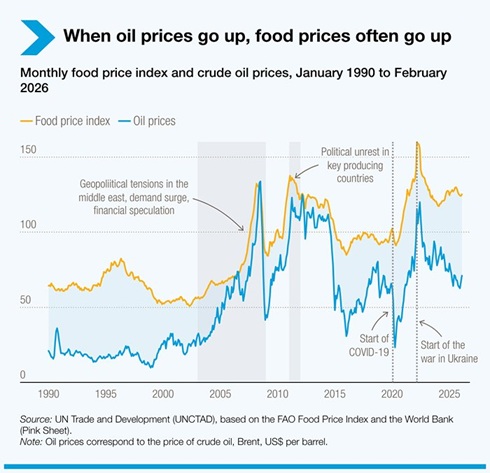
Rising energy prices risk pushing global food costs higher
Rising energy prices linked to the crisis are also driving up transport and fertilizer costs, which could push global food prices higher.
UN analysts warn that when oil and gas prices rise, food and fertilizer costs often follow –intensifying cost-of-living pressures and increasing the risk of hunger for the most vulnerable.
Ship transits through Strait of Hormuz near standstill
New attacks reported in Strait of Hormuz
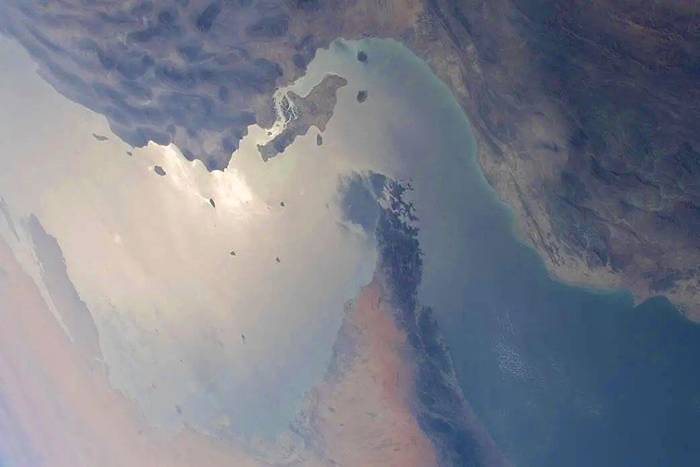
Early today, reports indicated that three commercial vessels were hit in the Strait of Hormuz, a key global shipping route for around 20 per cent of the world’s oil.
Since the war began on 28 February, a total of 21 incidents have been reported by vessels operating in and around the Arabian Gulf, the Strait of Hormuz and the Gulf of Oman.
These come as the US said on Tuesday that it had targeted Iranian mine-laying vessels near the Strait.
Lebanon: Migrants pushed from one crisis to another
The war has uprooted well over 700,000 people in Lebanon to date, following Israeli evacuation orders issued for communities south of the Litani river and strikes on reported Hezbollah targets in southern Lebanon.
It’s a fresh blow for people who’ve already fled conflict and suffering elsewhere in the region, including Sudan and Yemen, as the UN’s top official in Lebanon, Imran Riza, explains.
