

Violence in the Middle East is continuing into a fifth day, with US and Israeli strikes against Iran and Iranian missile and drone attacks reported across several countries in the region. The escalating confrontation is disrupting airspace, transport and daily life while raising fears of a wider regional conflict. Follow our live coverage for real-time updates, reactions and humanitarian developments from across the United Nations system. UN News app users can follow the coverage here.
Highlights
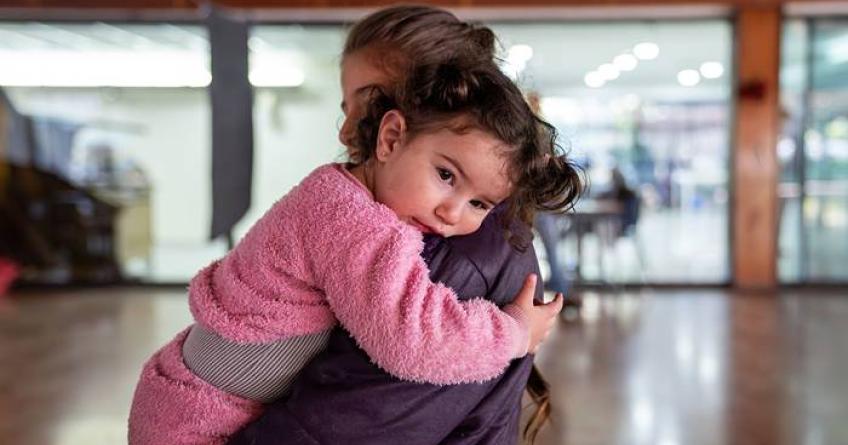
- Children are increasingly bearing the brunt of the escalating violence, with an independent rights committee stressing they must never be treated as collateral damage.
- The UN Secretary-General is conducting intense diplomatic outreach to leaders around the region in search of de-escalation and an end to the conflict.
- With peacekeepers in Lebanon concerned over ceasefire violations by Hezbollah and the Israeli military, concerns are growing for civilian safety amid mass displacement.
- Hospitals and other health facilities have reportedly been damaged amid the conflict, raising concerns for medical workers and patients, the UN health agency WHO warns.
The UN nuclear watchdog, IAEA, says latest satellite imagery shows no damage to nuclear facilities and “therefore no radiological release risk at this time.”
On the move: Displacement surges across the Middle East
Fresh violence and cross-border tensions this week have driven new waves of displacement across the region, even as some borders remain open and movements elsewhere stay within normal patterns. Here is a snapshot of the situation as of 3 March, based on data from UNHCR and partners.
Iran: Departures from Tehran, borders stable
- An estimated 100,000 people left Tehran in the first two days following the attacks.
- Between 1,000 and 2,000 vehicles per day were reported departing the capital, mostly heading north.
- There has been no reported spike in cross-border movements linked to recent events.
The Islam Qala crossing with Afghanistan remains stable.
Iraq: Targeted entry restrictions
- Bashmakh and Parwezkhan crossings are restricting entry for Iranian nationals.
- Only Iraqis already inside Iran may return to Iraq, and only Iranians already inside Iraq may return to Iran.
- Other crossings remain open.
- Movements remain consistent with normal patterns.
Lebanon: 58,000 sheltering, more expected
- 58,000 people are sheltering across 320 collective sites.
- 52 sites are not yet at full capacity.
- Displacement from southern Lebanon is ongoing.
- Lebanese and Syrians are moving towards West and Central Bekaa and Baalbek-Hermel.
- Overall national displacement figures have not yet been released, and numbers are expected to rise.
Syria: Crossings triple daily average
- Nearly 10,000 Syrians and close to 1,000 Lebanese crossed into Syria on 2 March.
- Arrivals were reported from southern Lebanon and southern Beirut.
- This represents approximately three times the average daily crossings recorded since the beginning of Ramadan.
