

“Syria is not starting from zero; it is starting from resilience. But resilience alone is not a development strategy. A functioning agrifood economy is.” – Pirro-Tomaso Perri, Acting FAO Representative in the Syrian Arab Republic.
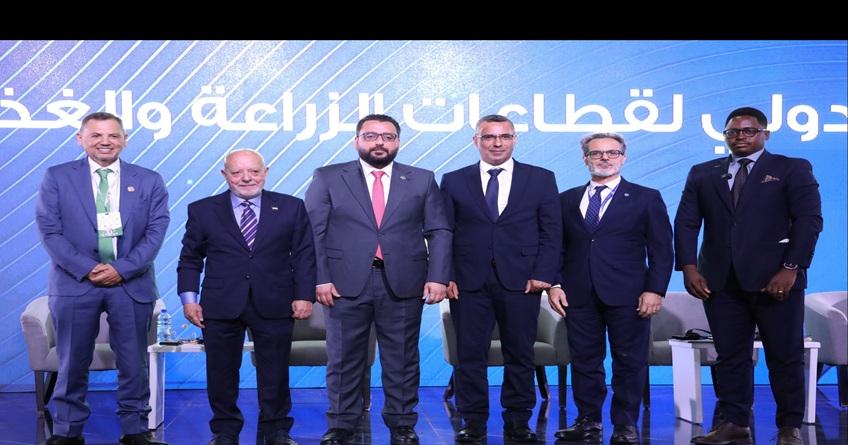
This was the message delivered by the Acting FAO Representative in the Syrian Arab Republic, Pirro Tomaso Perri, during his opening remarks at the Food Syria Summit, taking place in Damascus from 26 to 28 July 2026 at the Damascus International Fairground. The event brings together key stakeholders from across the food production value chain, from agriculture and food processing to packaging and distribution, all working towards delivering quality food to consumers.
Held under the patronage of the Ministry of Economy and Industry and the Ministry of Agriculture, the Food Syria Summit convened leading actors in the food production sector, including ministers and ambassadors from Lebanon, the Republic of Korea, Italy, and other countries, together with representatives of the United Nations, government institutions, the private sector and Syria's Food Heroes – the farmers who kept agricultural production alive through years of crisis.
"Agriculture will not rebuild Syria alone. But Syria cannot rebuild without agriculture."
In his opening remarks, Perri underscored Syria's growing openness to international partnerships in support of the country's recovery.
“When a farm recovers, an entire chain can begin moving,” Perri stated: “Agriculture reaches across Syria. Its economic life extends well beyond the farm gate – to seed suppliers, machinery workshops, transporters, veterinarians, processors, warehouses, retailers, exporters and financial services.”
He set out three ambitions for Syria's agrifood recovery: first, make every drop and every hectare more productive; second, make every Syrian product carry more value; and third, make every serious investment possible and responsible.
“Together, these ambitions point towards an agrifood system that is more productive, water-efficient, market-oriented and inclusive.” Perri concluded.
Perri also joined the Ministerial Panel on the transformation required to build productive, sustainable and resilient agrifood systems. The discussion focused on agriculture's role in economic recovery, the transitions required to build forward, and the conditions needed to attract productive investment.
Agriculture as a cornerstone of recovery: Perri described agriculture as one of Syria's widest economic networks, connecting farms with inputs, machinery, transport, veterinary services, processing and trade. Building on knowledge, entrepreneurship and diverse products that have endured, the sector can generate rural jobs, support sustainable returns, revive local economies, reduce import dependence and strengthen exports.
Building Forward Better: Perri outlined four transitions, from dependence on a good season to resilience in every season; from commodities to greater value; from isolated farmers to connected economic actors; and from fragmented projects to a nationally led transformation. This calls for better water governance, resilient inputs and services, functioning markets, finance, technology, strong institutions and reliable data, within a water-efficient and inclusive system.
- Turning potential into confidence: Productive investment depends on clear rules, reliable information and shared risk. The Government provides direction and public goods; farmers contribute knowledge and enterprise; businesses bring capital, innovation and markets; and international partners help strengthen institutions, finance infrastructure and reduce early-stage risk. FAO can help connect these efforts and prepare responsible, bankable opportunities.
Meeting Syria's Food Heroes
At its pavilion, FAO hosted a photo exhibition and welcomed seven women agripreneurs from rural communities who showcased a range of authentic Syrian processed food products. Through their participation, they shared the stories behind their handmade products, from cultivating crops and applying sustainable agricultural practices to processing, packaging and marketing their products in local markets.
The photo exhibition, "Meeting Syria’s Food Heroes," highlighted the experiences, challenges and achievements of farmers and livestock keepers. Their stories illustrated how the adoption of FAO-supported good agricultural and climate-smart practices has helped improve food production, strengthen livelihoods and create new opportunities for rural communities.
